
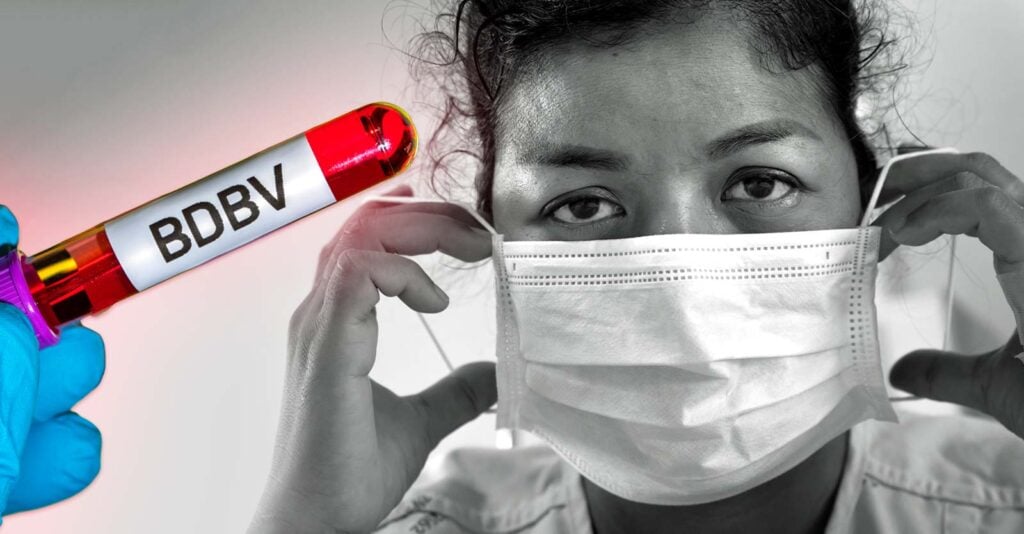
The Ebola virus was first discovered in 1976 near the Ebola River in what is now the DRC. Licensed vaccines such as Merck’s Ervebo have since shown strong protection against the Zaire strain of Ebola. But no approved vaccine or specific antiviral treatment yet exists for the Bundibugyo strain, which is responsible for the latest outbreak.
As health officials work to contain a growing Ebola outbreak in Central Africa, questions are resurfacing about why some strains of the virus still lack approved treatments nearly 50 years after Ebola was first identified.
The World Health Organization (WHO) has reported 900 suspected infections and 220 deaths through ongoing transmission of the Ebola virus in parts of the Democratic Republic of Congo (DRC) and Uganda.

The agency warned that outbreaks in conflict-affected and resource-deprived regions can escalate quickly if containment efforts falter.
The virus was first discovered in 1976 near the Ebola River in Zaire, now the DRC. Licensed vaccines such as Merck’s Ervebo have since shown strong protection against the Zaire strain of Ebola, responsible for major outbreaks in West Africa from 2014-2016 and the DRC from 2018-2020.
However, no approved vaccine or specific antiviral treatment yet exists for the Bundibugyo strain, which is responsible for the latest outbreak.
Public health experts say the gap reflects long-standing research priorities that have centered on the most extensive and lethal Ebola variants, leaving less common strains with fewer medical remedies.
Dr. Amesh Adalja, a senior scholar at Johns Hopkins Center for Health Security in Baltimore, Maryland, said Ebola vaccine development initially focused on the Zaire strain due to both its outbreak history and biodefense interest.
“Vaccines targeted to the Zaire species of Ebola were developed first because this species was the most common form of Ebola and also was the subject of Soviet bioweapons development efforts,” Adalja said.
“In recent years there have been programs developed to target the second most common form of Ebola, Sudan, and there is interest in Bundibugyo countermeasures as well.”
James Lyons-Weiler, Ph.D., author of “Ebola: An Evolving Story,” said any countermeasures taken to combat Bundibugyo have lagged due to delayed diagnostics and overall lack of preparedness.
“Everyone pretends the pathogen surprised them,” Lyons-Weiler said. “Bundibugyo did not appear from nowhere. The time to act is before, not after.”
Bundibugyo strain was ‘lower priority’
The WHO said two candidate vaccines are under development for the Bundibugyo strain.
The University of Oxford and Serum Institute of India are cultivating one based on the ChAdOx vaccine platform, originally developed to combat Nipah virus, a deadly disease that can spread from bats and pigs to humans through contaminated food or close contact.
According to the University of Oxford, ChAdOx1 vaccines are non-replicating viral vectors, which means they can’t multiply in the body or cause the disease the vaccine is designed to protect against.
The International AIDS Vaccine Initiative is developing an rVSV (recombinant vesicular stomatitis virus) single-dose Bundibugyo vaccine aimed at preventing zoonotic diseases similar to Lassa, Marburg and Sudan Ebola viruses, a WHO representative told The Defender.
Researchers in China reported a multivalent mRNA vaccine in the journal Proceedings of the National Academy of Sciences that protected animals against Ebola, Sudan and Bundibugyo viruses by combining multiple viral antigens into one lipid nanoparticle. The vaccine, which uses the same technology as COVID-19 vaccines, is designed to fortify the immune system against multiple orthoebolaviruses.
Meanwhile, the University of Oxford’s Pandemic Sciences Institute, working with the Serum Institute of India, is preparing an experimental Ebola vaccine for possible clinical trials in as few as two to three months, according to Bloomberg.
The vaccine is currently in animal testing and is being rapidly advanced as the Bundibugyo outbreak continues in the DRC.
The latest propagation of Bundibugyo is the 17th recorded Ebola outbreak in the DRC. The last Bundibugyo contagion transpired in the region in 2012, and before that, in Uganda from 2007-2008, according to the WHO.
“Bundibugyo is not a more common species of Ebola, and therefore was a lower priority for research and development,” said Nyka Alexander, communications lead at the WHO.
“The priority for now is to ensure strong response and control measures: safe and optimized care, early detection, adequate IPC [Infection Prevention and Control], rigorous contact tracing, safe burials, and community engagement,” Alexander said.
The WHO said it convened meetings on vaccines and therapeutics during the past two weeks and expects to report expert recommendations soon.
First major test of global outbreak response
A new analysis from the health policy organization KFF says the growing Ebola outbreak in the DRC is becoming the first major test of U.S. global outbreak response capabilities following cuts to foreign aid and public health programs.
According to KFF, the U.S. has pledged $23 million in emergency funding, activated Centers for Disease Control and Prevention (CDC) emergency operations, deployed personnel, and promised support for up to 50 Ebola treatment units in DRC and Uganda.
But the report said the response is occurring under “very different circumstances” than previous Ebola outbreaks because of the dissolution of the U.S. Agency for International Development (USAID), reductions in foreign aid and U.S. withdrawal from the WHO.
Robert Byamungu Buraga, who has worked on Ebola responses as a WHO fleet manager in four provinces across the DRC, said structural weaknesses and distrust of authorities continue to complicate containment efforts.
“Recent cuts of USA funds to WHO, USAID and some universities and research institutions may have negative consequences on the efforts to get a cure or a vaccine,” he said.
Buraga, who resides in the DRC, said years of unrest in eastern Congo have eroded trust in government and international responders, making community engagement a central challenge.
Buraga added:
“Decades of non-ending conflicts and weak health and economic governance raised defiance on national and international authorities and agencies. Sudden engagement of these authorities to respond to this epidemic is somewhat unusual and even suspicious for local communities.
“Anthropologists should again be called on to the rescue, and these anthropological aspects of the matter should be addressed as was done in the 2018-2020 epidemic … good and strong coordination at all the levels of the response management and leadership is critical to its success.”
The next ‘significant pandemic’?
Former CDC Director Robert Redfield recently told NewsNation that the latest Ebola outbreak could become a “very significant pandemic.” (Dr. Redfield did not respond to several requests for comment from The Defender.)
Conversely, other medical experts stress that Ebola’s propagation route makes it fundamentally different from airborne viruses such as COVID-19.
Dr. Meryl Nass said that distinction remains central to outbreak control.
“The important thing to emphasize is that the mode of transmission is through bodily fluids which means you can’t get it casually,” Nass said. “It’s not something you can get that’s travelling through the air like COVID. Outbreaks can contain themselves once people realize what they shouldn’t do.”
Related articles in The Defender