I had a bad dream that our POTUS decided to help along our genocide by passing a law that required every farm in America to apply massive doses of Glyphosate to increase crop yields. Incredibly, this would be justified as yet another “National Security Issue.” I woke up in a cold sweat, and slowly recovered. Then, back in the real world, I turned on the news from the Trump White House. Donald Trump just did an Executive Order to boost worldwide usage of Glyphosate, otherwise known as Round Up.
When I grew up in the 1960s, we had food safety organizations like the USDA and FDA that were the envy of the Western World. I sat through “assemblies” in elementary school where the entire student body gathered in the Lunch Room/Auditorium to watch 16mm movies about living in America and the jobs we could dream about. As I was more interested in space and technology than chemistry, sitting through a Government sponsored film on how food goes from the farm to the table was a task. But anything to keep me from the classroom was good, even a film paid for by Uncle Sam.
Even as a precocious kid whose attention span would today make me a candidate for a cornucopia of drugs, I did take away through some sort of osmosis that America was not only the “breadbasket” of the world, but had the safest foods in the world. And, throughout most of the 20th century we arguably had the highest food safety standards.
Promoting love of country (and our great American “Know How”) was what those government sponsored films were all about. But things changed in the 1980s when a company started a crop revolution to increase yields, first with soybeans and then corn.
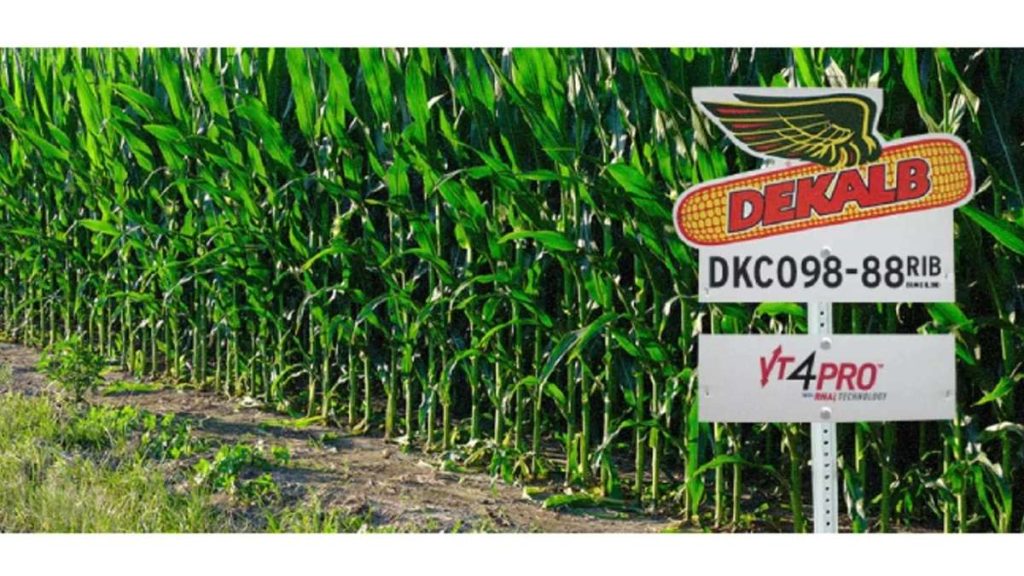
Back in the pre GMO (Genetically Modified Organism) 1960s, the most productive farms could produce over 100 bushels of corn an acre. Today, over 200 bushels an acre is possible (Iowa). That’s an amazing boost to the world’s food supply.
What changed? The movement to corporate, large scale farming has been growing, especially with dairy. But that’s not the big driver.
Monsanto
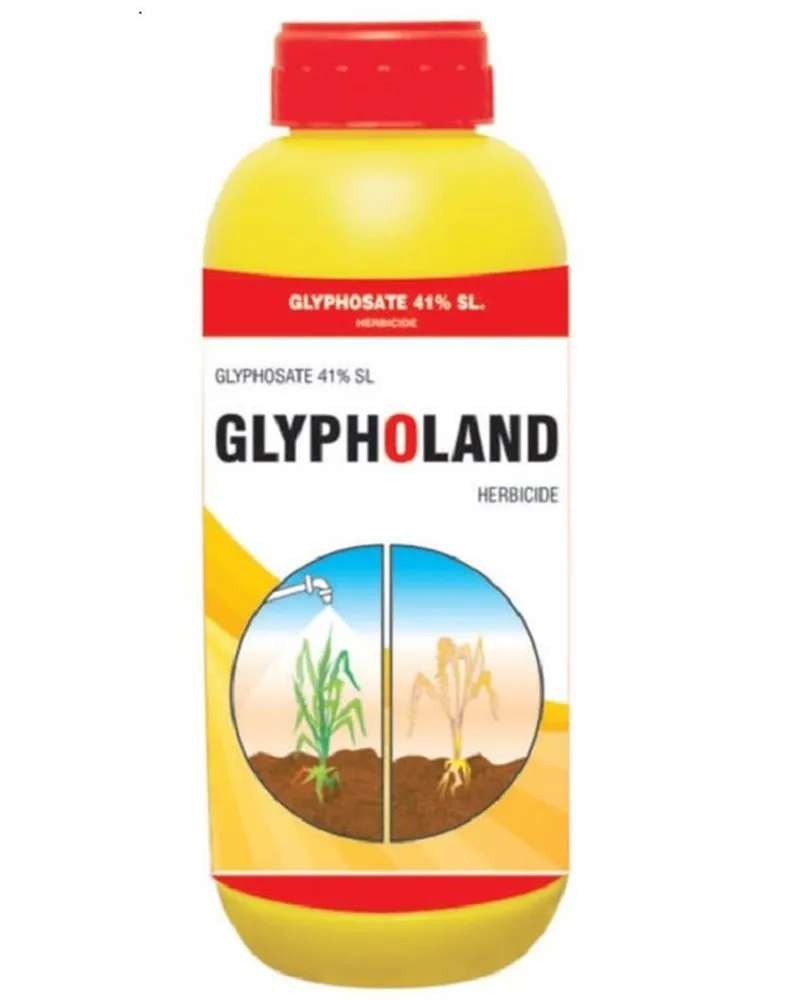
Glyphosate was invented in Switzerland and was eventually patented in 1964 for use as a boiler and pipe cleaner, due to its ability to effectively bind to and remove minerals like calcium, magnesium, manganese, copper and zinc.
Later, Chemists at Monsanto discovered it also could kill weeds. But, too much could also kill the crop….. and sales at St. Louis Based Monsanto. So, Monsanto biochemists got to work.
In the 1980s, Monsanto marketed a GMO seed of their own creation to farmers, mainly in the Midwest. The “Frankenseed” was designed to do one thing: develop new crops resistant to the damage caused by Glyphosate, it’s most profitable product and marketed to the world as Roundup.
Monsanto’s GMO seeds were created for the sole purpose of modifying crops to become resistant to large quantities of chemical herbicides like Roundup (without dying) in order to increase crop yields, sell more GMO seeds and more Roundup. If the GMO solution worked it would be the most brilliant business plan in US History.
And, how successful they were.
From EPA:
“The most widely used crop chemical in the United States is glyphosate, which is the active ingredient in many herbicides, including Roundup. It is primarily used on corn and soybeans, covering nearly half of all planted acres for these crops.”
Actually, over 90% of America’s Corn is now treated with Glyphosate.
The Problems with Glyphosate
Glyphosate has been tested by the IARC (International Agency for Research on Cancer) and they have determined that it is a Class 2 Probable Human Carcinogen. Non Hodgkins Lymphoma has been connected to high exposures to the chemicals, mainly in the manufacturing and application areas.
“The International Agency for Research on Cancer (IARC) classified glyphosate as “probably carcinogenic to humans” based on evidence from animal studies and limited evidence from human studies. This classification was made after a thorough review of scientific literature and is recognized globally.”
This is an ongoing source of lawsuits for Bayer (3) that inexplicably bought Monsanto, along with their known liabilities, in 2018 for $66B. Lawsuit exposures are so monumental that Bayer has hinted at bankruptcy. However, that risk has been greatly reduced by the Trump Administration who not only are protecting Bayer from liability but are doubling down in the opposite direction of protecting the public from a dangerous chemical that should never have been introduced into the food supply.
Bayer said Tuesday, Feb. 17, it had reached an agreement to pay as much as $7.25 billion to resolve tens of thousands of lawsuits. At the same time, and now with the tacit blessing of our President, the German-based company has convinced the U.S. Supreme Court to hear an appeal that would sharply limit its liability in the lawsuits.
In America as well as the EU, Glyphosate is not banned outright and is regularly used on cash crops, fruits and vegetables. Soybeans and Corn are the most likely crops to be treated with Glyphosate.
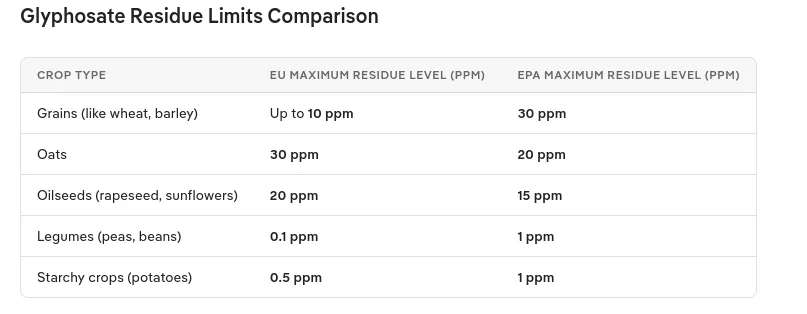
From AI:
Europe tests corn and other foods for glyphosate residues to ensure they do not exceed established safety limits. The European Food Safety Authority (EFSA) monitors these levels as part of its regulatory framework.
Head in Sand
In what was once the premier food safety nation of America, testing for residual Glyphosate in our food supply by the USDA stopped in 2016. This was an important change because the testing helped identify fruits and vegetables most likely to be heavily contaminated with pesticides, helping consumers decide when to buy organic.
The FDA is testing for Glyphosate in food used for human and animal consumption, but this is essentially a pass/fail of EPA limits.
A pass/fail system of measurement has little consumer protection value because the public won’t know which fruits and vegetables are most or least contaminated. Moreover, the limited FDA testing done in America is not nearly as rigorous as testing in EU that samples thousands more batches each year than we do.
Plans for the USDA to start up detailed testing of Glyphosate needed for credible food safety rankings was to restart in 2024 but were halted largely due to “budget concerns”. It is slightly more expensive to test for Glyphosate than other pesticides and herbicides.
I am no fan of Government food regulation but if we must it should provide the public with detailed analyses on the most commonly used pesticide on our food supply that may have serious long term health (and pollinator) consequences due to it’s ubiquitous nature. It’s in nearly everything we eat and in many sweetened drinks.
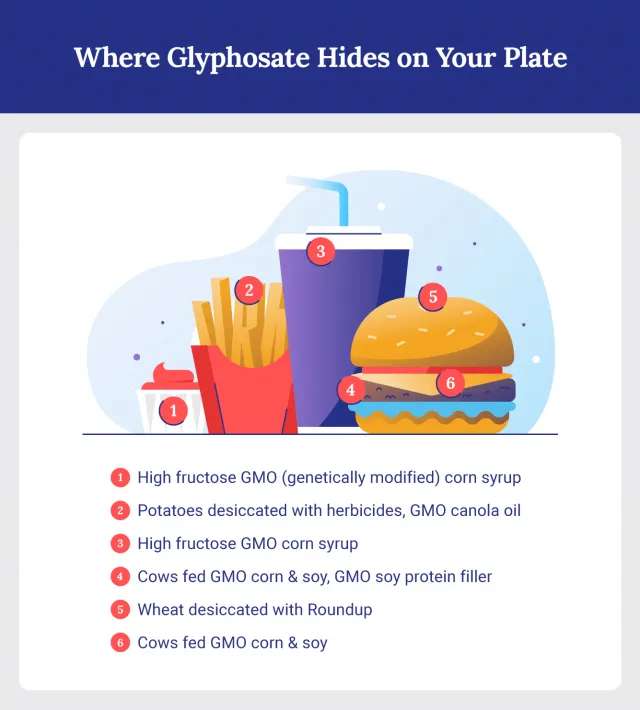
When the US Government doesn’t make detailed test results available on the foods we eat, the public won’t know if a farm’s products are overexposed to pesticides by accident or with intent to increase yields. This is the cornerstone of any Food Products Quality Control system. (4)
The Pipe Cleaner
Remember what Glyphosate was intended for – that nasty “pipe cleaner”? Well, if inducing cancers in the human population isn’t bad enough, that “pipe cleaner” also cleanses our foods of nutrients, making us so unhealthy that we have to take vitamins to make up the difference.
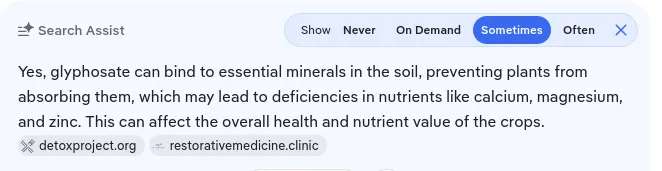
You would almost think that Monsanto’s Glyphosate is used in our food supply to trade bodies for crop yield. Well, it’s also killing something else – an even more critical target.
Don’t Kill Our Pollinators
Beyond the documented cases of Non Hodgkins Lymphoma and loss of nutrients in our food supply, something else is going on that should be raising red flags. It’s the loss of our insect population and, especially, the honeybee which is critical for pollination. Bees are responsible for 1/3 of food crop pollination.
While there may be more than one reason that bees are dying off (e.g. mites) it seems likely that Glyphosate is a major contributor, especially as residues are now being found at high levels in honey made in America.
“Pesticides lower the bees’ immune systems, weakening the hive and leaving it open to parasitic infection.”
Even if the Ag/Govt complex questions IARC methodologies (largely accepted for decades in identifying and regulating carcinogens), the potential for far reaching effects on us via loss of nutrition, the bees and our entire food chain can no longer be ignored.
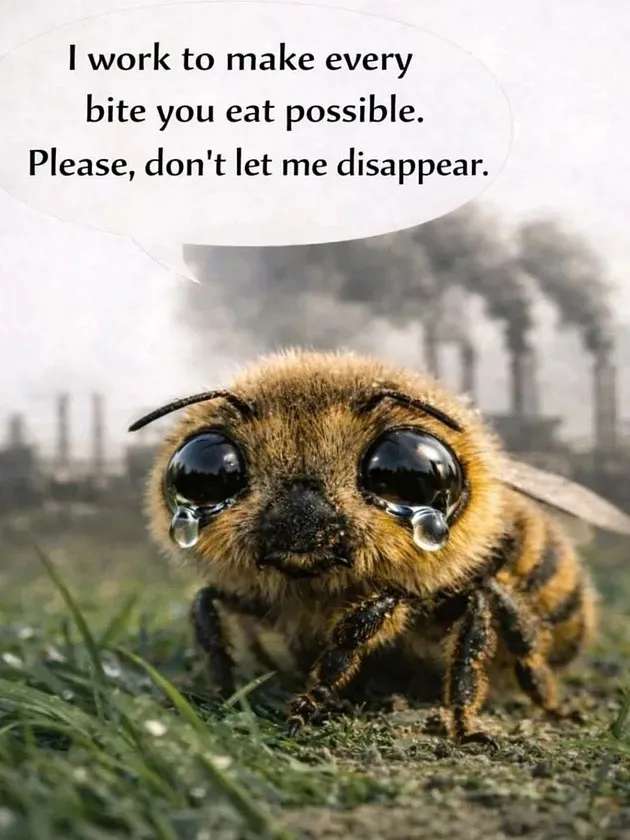
Until the Government stops promoting the poisoning of it’s citizens, selectively buying organic foods may be an option, assuming you don’t like consuming pipe cleaner. But that comes with a high price.
Beyond the cost, there is the risk of fake USDA Organic labeling. So, if you buy Organic it makes sense to know which foods are most likely to have Glyphosate residues and prioritize accordingly
So, where can we go to find out which foods are most likely to have high doses of Glyphosate?
Environmental Working Group
An organization called Environmental Working Group (EWG) is known for their annual publication called The Dirty Dozen, referring to the top 12 fruits and vegetables that are heavily contaminated and, by implication, should be avoided except for organic sources. EWG has been a helpful advocate for the burgeoning Organic movement. But, there is a problem with this food safety watchdog.
After seeing their other research publication The Clean Fifteen, I wondered why they had Sweet Corn as the #2 safest food you can eat as corn is the 2nd most heavily Glyphosate treated crop in America.
Turns out, those rankings don’t include Glyphosate. That’s because they only use USDA’s pesticide data – and the USDA no longer tests for Glyphosate.
Other pesticides, yes. Roundup, no.
From EWG Website:
The food-weighting factor for pesticide residues on fresh and frozen fruits and vegetables draws on data produced annually by the U. S. Department of Agriculture Pesticide Data Program (PDP)1, which publishes annual monitoring data of pesticide concentrations on fruits and vegetables.
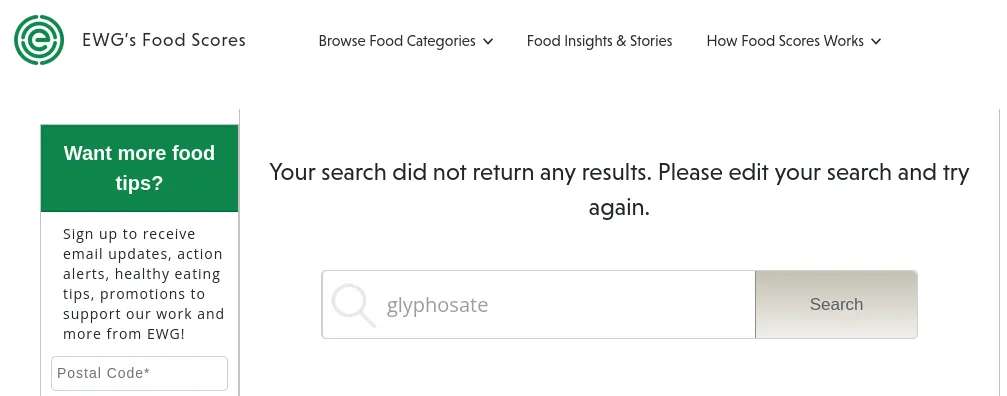
EWG has a lot of excellent consumer information that people can use to evaluate food safety. However, they have not come clean on Glyphosate no longer being a factor in their famous fruit and vegetable rankings.
My questions to EWG:
- How can EWG fruit and vegetable rankings state that non organic Sweetcorn (part of America’s 2nd largest GMO crop) is safe to consume based on USDA Pesticide Data that omits Glyphosate?
- How can EWG say with certitude than any of the fruits and vegetables on your Clean Fifteen list are safe when you don’t take into account residual levels of Glyphosate?
Editors Note: I also wonder how credible an organization can be that still believes the world is going to end because of Global Warming?
What to do?
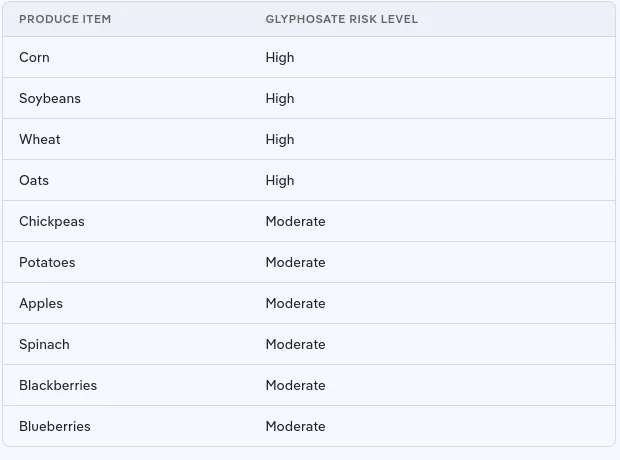
Since consumers can’t test chemical contamination ourselves, we have to trust labels like “Non GMO” and “Organic” to some degree. Unless we grow our own food, we have no alternatives at present. We can make informed decisions based on what we generally know about where Glyphosate is most used. Here are some of the highest contaminated foods:
Tell your Congressman that if America can forgive billions in Covid Fraud money from known thieves and still have the moral authority to demand income taxes, they can certainly produce a report for fraction of that to make publicly available the specific amounts of Glyphosate residues in our food supplies. This will help consumers know what food to buy from Organic Sources with USDA Organic Label.
While you are at it, maybe also tell your Congressman to have SCOTUS rule against the unconstitutional nonsense EO of Donald Trump that will endanger the world’s health as he did with Warp Speed.
Sic Semper Tyrannis
1 Soybeans and Corn are the most abundant foods in the food chain, from animal feeds to processed foods.
2 All critical human elements for human health.
3 Bayer has considered bankruptcy protection due to the liabilities from class action lawsuits claiming Glyphosate caused cancer in over 100,000 plaintiffs.
4 Author has been a consultant on food products liability for several property/casualty insurance carriers.