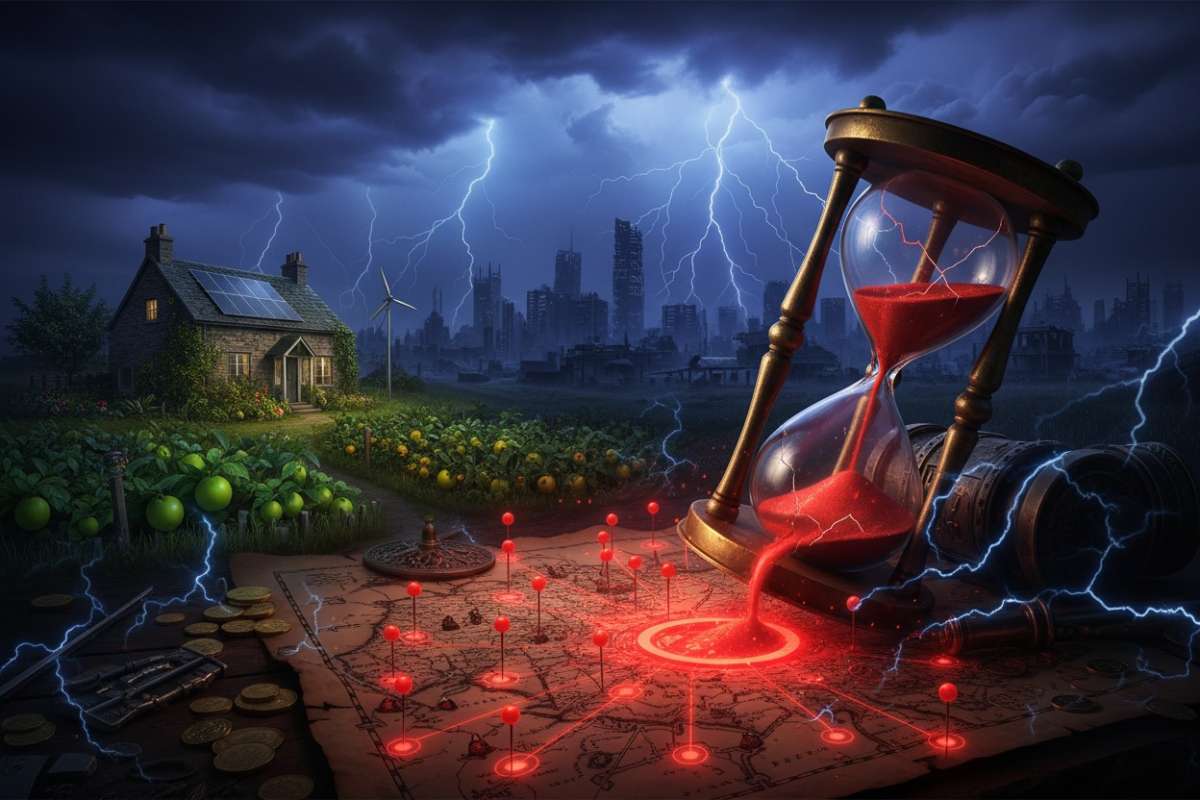
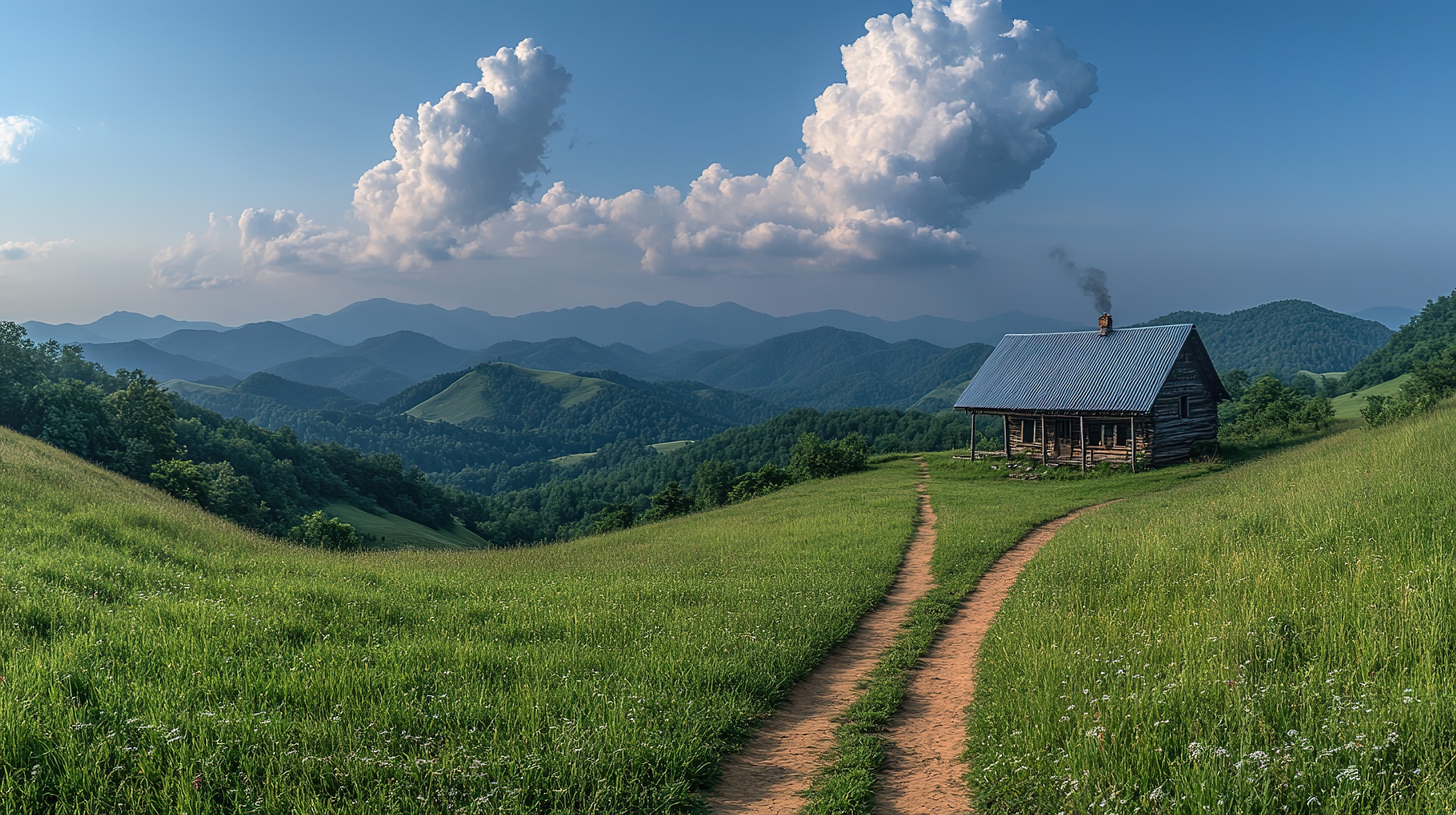
When people talk about “getting off the grid,” the image that usually springs to my mind is the full-on pioneer fantasy: selling the house, buying 40 acres in the bush, installing solar panels, drilling a well, raising chickens, and growing enough potatoes to survive the next ice age.
I envy those people. Honestly, I do.
But let’s be real—most of us aren’t cut out for that level of commitment, and most of us don’t need to be -— yet. At least for a little while, we can probably muddle along semi-attached to the system—still buying groceries at Loblaws, paying the hydro bill to whatever soulless utility now owns it, and calling an ambulance if we get flattened by a Tesla.

But after what happened to me this morning—for the umpteenth time—I’ve come to understand “off the grid” in an entirely different, far more urgent way. It no longer means geographical escape. It means digital and bureaucratic escape. It means refusing to let the Machine feed on my time, my sanity, and my personal data one byte at a time.
This morning, I tried to open a simple account with a Canadian service that lets you buy Bitcoin directly through your bank. Now, don’t get me started about Bitcoin, digital currency, gold, silver, and all that crap. That is a hellhole in its own right. I’ll save that for another article down the road (maybe).
What should have taken ten minutes turned into an hour-long descent into perdition. Upload passport. Upload driver’s license. Take selfie. Take another selfie, this time with your firstborn in arms. Turn head 30 degrees so the algorithm can see your left ear. Hold up a piece of paper with today’s date scrawled on it.
Wait.
Wait some more.
“We’re sorry, we cannot verify your identity at this time.”
No explanation. No human to ask. Just the cold, dead eye of the AI staring back.
Eventually, it all must have worked out, as it allowed me to transfer $240 from my bank to the service. My bank said the transfer was accepted and sent the money. The Bitcoin service rejected it and said they were going to refund it. What sense does that make? Apparently, my bank account is in the name “Todd Hayen,” and the Bitcoin service had auto-filled “Todd M. Hayen” from my uploaded ID. A middle initial. One single letter. That was enough to blow the entire process to smithereens. And they offered no solution.
I jumped into chat support. The “agent” was, of course, a bot. I asked, “Are you human?” “No,” it replied cheerfully, “but I’m here to help!” Yeah, you’re here to replace a $60,000-a-year employee with a $100/month server bill, pal.
This is not an isolated incident.
Last year, I spent the better part of two days trying to pay my residual 2024 U.S. taxes (yes, as a Canadian resident and a US citizen, I’m still on the IRS leash). The online form rejected my address every single time. Put “ON” for Ontario? Rejected. Put a comma after the city? Rejected. Space in the postal code? Rejected. No space? Rejected. Ten attempts, 45 minutes of my life gone, until I finally guessed the exact combination of formatting that the robot gods demanded.
Again—no error message that actually told me what was wrong. Just silent, passive-aggressive rejection.
When I applied for US Social Security benefits a few years ago, the errors were so bizarre and the fixes so impossible that the only solution offered was to drive nine hours to the physical Social Security office in Virginia (close to where my sisters live). From Canada. There I talked to a human, a nice one, and all was resolved. And there wasn’t even a problem to resolve. The issue that barred me from success was that their online system would only accept a 5-digit zip code, not the weird alphanumeric Canadian postal code. And the system knew, and accepted, that I lived in Canada (as many Americans still enslaved by the IRS do). WTF??
Remember back in the day, when humans roamed the earth and sat at a customer service desk looking at your documents? If the name on the application was “John B. Doe” and the driver’s license said, “John Brian Doe,” no one would flinch. They just said, “Looks good, sign here.” But now that robots are running the show, this sort of discrepancy blows a circuit.
This is the new soft gulag.
They don’t need to kick in your door at 3am. They don’t need to freeze your bank account with a tweet from Trudeau (back when that is exactly what he did). They can simply make everyday life so frustrating, so exhausting, so humiliating that you voluntarily withdraw from participation.
A death by a thousand verification cuts.
You’re not banned—yet. You’re not cancelled—yet. You’re just…slowly, politely, relentlessly throttled. The algorithm doesn’t hate you; it simply cannot compute you. And because it cannot compute you, you no longer exist in the frictionless digital paradise promised to the compliant. Think how easy all of this would be if someone, or something, actually wanted to mess with you? That’s coming, I’m sure. Maybe it already has, and I am currently on the black list.
I now understand “getting off the grid” as the disciplined, deliberate decision to stop feeding the beast wherever possible. Cash at the farmers’ market. In-person banking with an actual teller who still possesses a pulse. Prescriptions picked up in person, paid for with bills that still have the Queen’s face on them. No more online applications that demand I photograph my dogs as proof of life. No more services that require me to train their facial-recognition model for free while they decide whether I’m allowed to participate in the economy.
The wilderness homestead is romantic, but the real rebellion in 2025 is far more mundane and far more radical: it is the refusal to dance for the machine.
Because every selfie I send, every document I upload, every CAPTCHA I solve is another droplet of my soul transferred into their reservoir. And one day soon, they’ll have enough to recreate me entirely—an obedient digital twin who never questions, never resists, never causes the system to throw an exception error.
I’d rather be inconvenient.
I’d rather wait in line at the bank and talk to a human who might roll their eyes at my old-man rants. I’d rather pay a little more at the independent grocer who still accepts cash. I’d rather drive an extra twenty minutes to a pharmacy where the pharmacist knows my name and doesn’t require me to scan a QR code to prove I’m allowed to buy cough syrup.
So, getting off the grid to me is making the attempt to remove myself from the system, from the machine. Which will probably prove to be more difficult than placing my body and home in the middle of the woods with solar panels on the roof and a 30-gallon-per-minute well in the back yard—up to my neck in last year’s crop of thousands of zucchinis.
No more applications online, no more IDs, no more selfies for verification. This is now what I think of when I hear “getting off the grid.” Engaging with the machine in the way I have described will kill me quicker than dealing with the next scamdemic they have planned for us. At least my death will not be due to a slow boil.